
A lot of estate planning and elder law attorneys are quietly using ChatGPT right now, and honestly, I understand why.
You are busy. Your team is busy. Marketing always needs something. A blog post, an email, a social post, a new page, a better headline, a webinar description, a follow-up sequence. It never really ends, and AI offers a very tempting promise: faster content, fewer blank screens, less expensive production, and maybe a little relief from the nagging feeling that your firm should be “doing more” online.
That part is not the problem.
The problem is that ChatGPT can make weak marketing sound confident. It can make generic positioning sound polished. It can make shallow content feel useful enough to publish, especially when everyone is tired, the deadline is real, and the output looks “pretty good” on first read.
And that is where firms get themselves into trouble.
Because in estate planning and elder law, the point of marketing is not to produce more words. It is not to sound active. It is not even simply to be found. The point is to help the right prospective clients feel confident choosing you.
That is a very different standard.
The Real Risk Is Not AI. It Is Shortcut Thinking.
I am not anti-AI. That would be a little ridiculous at this point. AI is here, it is useful, and when handled well, it can absolutely support a firm’s marketing system.
But AI is a tool. It is not a strategist. It is not your ethics committee. It is not your managing partner. It does not understand the actual risks in your market, the kind of client you want more of, the perception your firm needs to protect, or the difference between content that fills space and content that builds trust.
That judgment still has to come from somewhere.
The danger I see is not that attorneys are experimenting with AI. The danger is that firms begin treating polished output as if it were finished thinking.
That happens faster than people want to admit. The article sounds reasonable. The headline sounds authoritative. The paragraph has a nice rhythm to it. The email is clean enough. So it gets posted, sent, scheduled, or handed off to someone else with the assumption that because it sounds professional, it must be safe and useful.
That assumption is doing a lot of damage.
A confident tone does not mean the content is accurate. A polished explanation does not mean it reflects your jurisdictional boundaries, your firm’s standards, your actual process, or your client’s emotional state. A readable blog post does not mean it supports your search visibility, your conversion strategy, or your positioning as the safer expert choice.
And in an AI-shaped search environment, generic content is not neutral. It actively makes you easier to ignore.
Being Found Is No Longer Enough
For years, firms treated online marketing as a visibility problem. Rank better. Publish more. Show up in local search. Stay active. Make sure the website looks credible. Those things still matter, but they are no longer enough on their own.
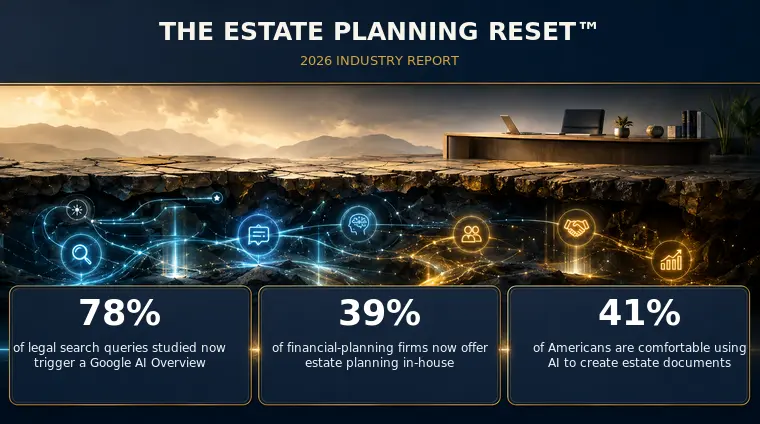
Your prospective clients now encounter information in a compressed, filtered, AI-assisted environment. They may see AI summaries before they ever click a website. They may compare several firms from a map pack. They may skim reviews, scan headlines, and make a quick emotional judgment about who feels established, focused, and trustworthy.
In that environment, sounding like every other firm is expensive.
If your AI-assisted content says the same things every other firm says, in the same safe, vague, pleasant language, you may technically be visible. But visibility without distinction does not create preference. It creates sameness.
And sameness is where price sensitivity grows.
When a prospective client cannot tell why your firm is different, they default to whatever feels easiest to compare. Location. Convenience. Price. A referral from someone who may or may not understand the quality difference. The first firm that responds. The firm that “seems fine.”
That is not how premium legal work should be chosen, but it is how people make decisions when the marketing fails to create confidence.
The question is not, “Can AI help us create more content?” Of course it can.
The better question is, “Does this content make our firm easier to choose?”
That is the standard premium firms need to use now.
Generic Content Creates Generic Positioning
One of the more frustrating things about AI-generated marketing is that it often sounds harmless. It is not always obviously bad. Sometimes it is perfectly pleasant, which is exactly why it slips through.
It explains what a trust is. It lists reasons someone may need a power of attorney. It offers a gentle reminder to update an estate plan after a life event. None of that is wrong in the broadest sense. It is just not enough.
A prospective client does not choose your firm because you published the 4,000th article on why estate planning matters. They choose you because something about your online presence helps them feel, “This firm understands my situation. They know what matters. They will help me avoid mistakes I do not even know to ask about.”
That feeling is created through judgment.
It comes from how you frame the problem, what you choose to emphasize, what you leave out, how clearly you guide the next step, and whether your marketing reflects the level of care and seriousness people expect from the attorney they are about to trust with deeply personal decisions.
AI can assist with drafts. It can help organize thinking. It can give you a starting point. But if nobody with real judgment is asking whether the content strengthens trust, reinforces attorney value, and supports the firm’s conversion path, then AI becomes a production shortcut disguised as progress.
And let’s be candid. A lot of firms do not need more production. They need better decisions.
Attorney Value Has to Be Defended in the Marketing Itself
This is especially important right now because estate planning and elder law firms are not only competing with other law firms. They are competing with DIY tools, financial advisors, document platforms, and a growing public assumption that legal documents are the product.
That assumption is dangerous, and your marketing should be actively correcting it.
Documents are easy. Judgment is not.
A revocable trust, a will, a Medicaid planning conversation, a special needs planning decision, a probate issue, or a family conflict that is quietly sitting underneath the paperwork is not just a content topic. These are moments where professional judgment matters enormously.
If your marketing reduces your value to “we prepare documents,” then you are accidentally helping the market commoditize you. If your AI-generated content sounds like a prettier version of a legal information page, it may be reinforcing the very problem you are trying to escape.
Your marketing should help prospects understand that the value of the attorney is not merely in producing the document. It is in identifying risk, asking the right questions, sequencing decisions, understanding family dynamics, avoiding avoidable problems, and helping clients make choices they may not fully understand on their own.
That is what AI cannot fake well without human direction.
And that is also what your prospective clients need to feel before they reach out.
How Premium Firms Should Use AI
The firms that win with AI will not be the firms publishing the most AI content. They will be the firms using AI with stronger standards.
That means AI can be involved in the process, but it cannot be the authority in the process. Someone still has to define the point of view. Someone has to know what the content is supposed to accomplish. Someone has to review for accuracy, specificity, tone, ethics risk, and conversion value.
More importantly, someone has to ask the uncomfortable question: “Is this actually making us more credible, or is it just making us more active?”
Because activity feels productive. I get it. A full content calendar gives everyone a little hit of relief. The blog is scheduled. The newsletter is sent. The social post is live. The box is checked.
But the market does not reward checked boxes. It rewards confidence.
If the content does not make your firm feel clearer, safer, more experienced, more focused, or more professionally guided, then it is not doing the job you think it is doing.
The better use of AI is not to replace judgment, but to support it. Use it to gather possibilities, pressure-test language, identify gaps, and speed up early drafting. Then bring the actual standards back in: your firm’s voice, your client’s concerns, your market position, your professional obligations, your conversion strategy, and your responsibility to protect the perceived value of your work.
That is not slower thinking. That is safer growth.
The Marketing Partner Question
This same standard should apply to the people helping you with marketing.
Attorneys understand the difference between a document preparer and a professional advisor. You spend a good portion of your own marketing trying to help clients understand why expertise matters. Then, oddly enough, some firms turn around and choose marketing help based on who can produce the fastest content, the cheapest website, or the most visible activity.
That disconnect matters.
If you expect clients to choose attorney judgment over a DIY shortcut, you should expect the same standard in the marketing partner guiding your firm’s online presence. Your marketing is now part of how prospects evaluate your professionalism. It is not decoration. It is not filler. It is not “just content.”
It is decision infrastructure.
It helps a prospect decide whether you are another option or the obvious safer choice.
That is why AI misuse is not a side issue. It goes directly to the heart of how firms are chosen now. In an environment where information is everywhere and attention is compressed, marketing has to carry more weight. It has to signal judgment faster. It has to distinguish your firm from generic alternatives. It has to protect attorney value at the exact moment prospects are deciding whether professional guidance is worth it.
If AI helps you do that, wonderful. Use it.
If AI helps you publish faster while making your firm sound like everyone else, then it is not a marketing advantage. It is a very efficient way to become more interchangeable.
The Decision to Make Now
The next decision for your firm is not whether to use AI or avoid it completely. That is the wrong debate, and frankly, it is already stale.
The real decision is whether your firm will use AI with standards.
Will your content be reviewed through the lens of accuracy, judgment, differentiation, and conversion? Will your website and follow-up reinforce why attorney guidance matters? Will your marketing help prospects understand the risk of choosing the cheapest or easiest option? Will your online presence make your firm easier to choose, not merely easier to find?
Those are the questions that matter.
We are unpacking this in our upcoming live webinar, Is ChatGPT Lying to You? (It Sounds So Convincing), on Thursday, June 25 at 10 am MT. We will talk about where AI-generated marketing goes wrong, why confident output can be so misleading, and how estate planning and elder law firms should use AI without weakening trust, rankings, or professional value.
If this has been sitting in the back of your mind as your firm experiments with AI, this is the conversation to attend.
Register for the webinar, and if you want the broader framework for how firms get chosen in an AI-shaped search environment, download our From Invisible to In-Demand Playbook. It will help you look at your marketing through the lens that actually matters now: not just whether people can find you, but whether they have a reason to choose you.
Frequently Asked Questions
1. Should estate planning and elder law firms avoid using ChatGPT for marketing?
No. Avoiding AI entirely is not the point, and for most firms it is not realistic. The better standard is to use AI as a tool, not an authority. ChatGPT can support brainstorming, outlining, editing, and early drafting, but attorney review, marketing judgment, ethical awareness, and conversion strategy still need to guide what gets published.
2. What makes AI-generated legal marketing risky?
The risk is that AI can produce content that sounds confident while being too generic, inaccurate, incomplete, or misaligned with your firm’s standards. For estate planning and elder law firms, the concern is not only whether the content reads well. The concern is whether it protects trust, reflects appropriate professional judgment, and helps the right prospects understand why your firm is the safer choice.
3. Can AI-generated content hurt our firm’s ability to get chosen?
Yes, especially when it makes your firm sound interchangeable. Generic AI-assisted content may fill a blog or social calendar, but if it does not communicate specificity, judgment, and professional value, it can weaken differentiation. In an AI-shaped search environment, firms need content that supports selection, not just visibility.
4. How should we review AI-assisted marketing before publishing it?
Review it through a higher standard than readability. Ask whether it is accurate, specific to your audience, aligned with your firm’s positioning, appropriate for your ethical obligations, and useful in helping a prospect take the next step. If the content sounds polished but does not build trust or clarify why your firm should be chosen, it needs more human judgment before it goes public.
5. Is publishing more AI content a good SEO strategy for law firms?
More content does not automatically mean better rankings or better leads. Search visibility still matters, but content volume without differentiation can create noise. Strong SEO for estate planning and elder law firms should be connected to clear positioning, useful authority, local relevance, and a conversion path that helps prospects move from information gathering to confident inquiry.
6. What will the June 25 webinar cover?
The webinar, Is ChatGPT Lying to You? (It Sounds So Convincing), will examine why AI-generated marketing can feel persuasive while still being risky or ineffective. We will look at how firms should use AI with judgment, where shortcut thinking damages trust, and how estate planning and elder law firms can protect attorney value while building marketing that helps them get chosen.