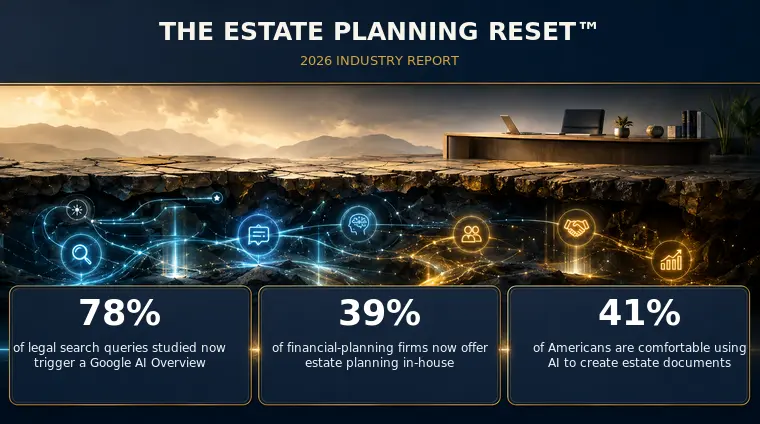

Estate planning and elder law firms are understandably focused on whether they are showing up online. They are watching rankings, reviewing traffic, paying attention to AI-powered search, and wondering whether the firms being surfaced today will be the same firms prospects contact tomorrow.
That concern is legitimate, but it can distract from a quieter problem. A potential client can find your firm, visit your website, read your content, download a guide, or submit a form and still leave uncertain about what happens next. When that occurs, the marketing did not fail to create visibility. It failed to carry confidence forward.
Prospects rarely choose a firm in one dramatic moment. They choose across a series of small experiences. Your website creates an expectation. Your form either makes action feel easy or burdensome. Your confirmation message either reassures the prospect or leaves them wondering whether anyone received the inquiry. Your follow-up either continues the same conversation or sounds as though it came from a completely different company.
AI Can Shorten the Search, but It Cannot Finish the Decision
AI summaries, map listings, directories, and search results may help a prospect create a short list quickly, but they cannot remove the emotional weight of choosing an attorney for a high-stakes legal matter.
Someone dealing with incapacity planning, long-term care, probate, or a complicated estate is not merely gathering facts. They are trying to decide whom they can trust with a situation they may not fully understand and cannot afford to mishandle. They may arrive with more information than prospects had five years ago, but they are not necessarily more confident. Often, they are more overwhelmed because they have consumed information without gaining the judgment needed to apply it.
That is why being found is only the first layer. Once the prospect reaches your firm, your digital system has to answer a more important question: Does this experience make the firm feel like the safe, credible, and obvious next step?
The Hidden Cost of Disconnected Marketing
Many firms have invested in all the right categories and still feel that marketing is not producing the return it should. They have a website, content, advertising, email, a CRM, and perhaps a lead magnet or webinar. The pieces exist, but the experience feels pieced together because each platform was added at a different time, by a different provider, for a different purpose.
The website makes one promise. The ad makes a slightly different one. The form collects information without explaining what happens next. The automated email is generic. The intake team follows up when time allows, using language that may not match the expectation created online.
The lead then appears to have gone cold, so the assumption is that the person was not serious, chose based on price, or was never a good fit. Sometimes that is true. More often than firms realize, the prospect encountered a series of small uncertainties and selected the competitor whose process felt clearer.
Clear Next Steps Are a Trust Signal
Law firms often treat the call to action as a website detail, something that belongs on a button or at the bottom of a page. That is too narrow. A clear next step is evidence of judgment.
When a firm tells a prospect what to do, what to expect, when they will hear back, and how the process will unfold, it communicates experience. The prospect does not have to guess whether to call, wait, gather documents, complete another form, or speak with a staff member first. The path feels intentional because it is intentional.
This matters in estate planning and elder law because many prospects are already delaying action. They may be worried about cost, family conflict, illness, loss of control, or making the wrong decision. A vague next step gives that hesitation somewhere to hide. A clear and calm next step lowers the emotional threshold for moving forward.
Follow-Up Must Continue the Same Conversation
One of the most common mistakes in legal marketing is treating follow-up as separate from the message that generated the inquiry. Marketing creates the campaign, the website captures the lead, the CRM sends a template, and intake takes over. Everyone completes a task, but the prospect experiences one journey.
If an article speaks to the fear of being unprepared, the follow-up should acknowledge that concern and make the next step manageable. If someone downloads a guide or attends a webinar about being chosen in an AI-shaped market, the next communication should build on that conversation rather than dropping the person into a generic sequence. If the website positions the firm as thoughtful, specialized, and high-touch, the response after an inquiry cannot feel vague or indifferent.
This is where a connected system becomes more valuable than a collection of marketing services. Website, SEO, content, advertising, lead capture, automation, and intake should work as one decision path that moves the prospect from awareness to confidence with as little unnecessary friction as possible.
The Firms That Get Chosen Reduce Uncertainty Early
The consultation should not be the first moment a prospect begins to trust the firm. Before that meeting occurs, the digital experience should have established a baseline of confidence. The prospect should understand what the firm does, who it serves, why its judgment matters, and what the next step will involve.
This is why chasing isolated AI tactics is the wrong response to a changing search environment. A firm may earn more impressions or produce more content, but none of that solves the selection problem if the experience after discovery remains disconnected. More visibility simply sends more people into the same uncertain path.
Premium firms use the pressure created by AI-shaped search as a reason to tighten the foundation. They make their positioning clearer, their trust signals more consistent, their follow-up more relevant, and their next steps easier to understand. They are not trying to manipulate a platform into recommending them. They are building a digital presence that gives prospects stronger reasons to recognize the firm as credible, focused, and worthy of trust.
Look at the Path, Not Just the Pieces
The useful question is not whether your firm has automation or whether someone responds to leads. The better question is whether the entire experience after discovery makes it easier for a qualified prospect to choose you.
Read your confirmation message from the perspective of someone worried about a parent’s long-term care. Open your automated email as though you had just submitted a probate inquiry after a death in the family. Notice whether the language changes from thoughtful and reassuring to transactional and generic. Look at whether the prospect is told what happens next or is simply thanked for reaching out.
On July 23 at10 am MT, we are going deeper into this in our live webinar, Why AI Recommends Some Lawyers and Maybe Not You. We will examine how AI-shaped search is changing the way prospects discover and evaluate firms, why disconnected marketing creates hesitation, and what a coherent digital system must do to help your firm get chosen rather than merely found.
Frequently Asked Questions
1. Why does follow-up matter if our website already explains our services?
A strong website creates the first impression, but follow-up confirms that the firm is responsive, organized, and prepared to guide the next step. Without that continuity, excellent website messaging can lose force quickly.
2. How quickly should a law firm respond to a new inquiry?
The response should be prompt enough that the prospect does not begin searching for alternatives or wondering whether the inquiry was received. Speed matters, but clear direction matters just as much.
3. Does connected follow-up require an expensive CRM?
No. Technology can improve consistency, but the real issue is alignment among the message, timing, ownership, and next step. A simple, well-managed process will outperform sophisticated software filled with disconnected templates.
4. What should the first follow-up message include?
It should confirm receipt, reflect the reason the person reached out, explain the next step, and set a realistic expectation for timing. It should also sound like the same firm the prospect encountered on the website.
5. How does follow-up affect selection in AI-shaped search?
AI and search may influence which firms enter the prospect’s consideration set, but the final choice still depends on trust and perceived risk. Connected follow-up strengthens the signals that the firm is credible, focused, and capable of guiding the matter professionally.
6. What is the clearest sign that our marketing system is disconnected?
A common sign is that prospects engage with content or submit inquiries but do not consistently move forward, while the firm cannot identify where confidence is being lost. When messaging, automation, intake, and next steps are not aligned, leads often appear to go cold even though the real problem is uncertainty.