
A lot of estate planning and elder law attorneys are quietly wondering whether webinars still work.
They may not say it exactly that way, because nobody wants to admit they spent time preparing slides, promoting an event, getting registrants, showing up live, answering questions, and then watching the follow-up go… nowhere. But that is usually the frustration underneath the question.
The firm did the webinar. People registered. Some even attended. A few thanked them afterward. The topic was useful. The information was accurate. The attorney was competent, prepared, and generous with their knowledge.
And still, the webinar did not create the kind of qualified consultations the firm expected.
That is where many firms draw the wrong conclusion. They decide the problem must be webinars. They think people are tired of them, or AI has replaced them, or prospects no longer want to attend educational events.
I do not think that is the real issue.
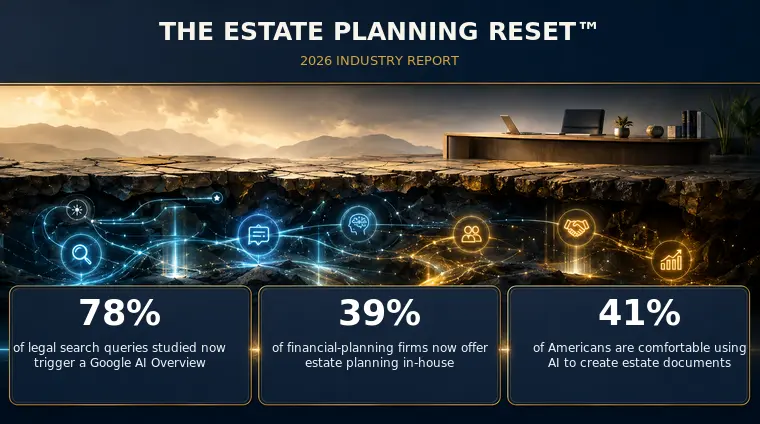
Webinars still work. In some cases, they work extremely well. But they work differently now, and that difference matters. In 2026, a webinar cannot succeed merely because the topic is interesting and the information is correct. Correct information is everywhere now. Basic explanations are everywhere now. AI can summarize surface-level estate planning concepts in seconds, and DIY platforms, financial advisors, and competitors are all shaping your prospect’s thinking before that person ever decides who to call.
So the question is not, “Can we get people to attend a webinar?”
The better question is, “Can this webinar help the right person become more confident choosing us?”
That is a very different standard.
Most webinars fail because they educate without creating decision confidence. They tell people what a trust is, what probate means, why powers of attorney matter, or what happens if someone does nothing. All of that may be true and useful, but information alone does not make someone ready to hire you.
In fact, information alone can sometimes make the problem worse. A prospect learns just enough to feel like they understand the issue, but not enough to appreciate the risk of handling it casually. They leave with a few notes, a vague sense that planning is important, and no compelling reason to believe your firm is the safest, clearest, most capable next step.
That is not a webinar problem. That is a decision design problem.
A good webinar does not just explain the topic. It guides the prospect through the emotional and practical decision they are already trying to make. They are not only asking, “What is this legal concept?” They are asking, “Does this apply to me? How serious is this? What could go wrong? Who can I trust? Will I feel embarrassed if I do not know what to ask? Is this going to be expensive? Will this attorney make it easier, or more complicated?”
Those are the questions that determine whether someone schedules a consultation.
And those questions are rarely answered by a generic educational presentation.
This is especially important in estate planning and elder law because your prospects are not making casual buying decisions. They may be dealing with aging parents, blended families, a recent diagnosis, a spouse who refuses to engage, children who disagree, a house they do not want to lose, or an old plan they suspect is no longer right. Even when the legal issue seems straightforward to you, it rarely feels straightforward to them.
That is why webinars have to do more than inform. They have to reduce uncertainty.
They have to help the prospect feel seen without making them feel exposed. They have to explain what matters without burying people in legal detail. They have to defend the value of attorney judgment without sounding self-important or fear-based. They have to make the next step feel not only logical, but safe.
This is where many firms unintentionally weaken their own value. They approach the webinar as if the goal is to prove they know a lot.
The prospect already assumes you know a lot. Or at least they hope you do.
What they need to feel is that you understand what actually matters in their situation, that you have seen the common mistakes before, that you can separate what is urgent from what is merely interesting, and that your process will help them make a good decision without being overwhelmed.
That is judgment. And judgment is what AI, templates, and generic online content cannot replace.
Documents are easy. Judgment is not.
A webinar in 2026 should make that difference obvious.
Not by lecturing. Not by scaring people. Not by turning the whole event into a sales pitch disguised as education. People can smell that, and frankly, they should. But by structuring the webinar around the prospect’s real decision process instead of the attorney’s preferred teaching outline.
For example, a traditional webinar might begin with definitions and legal categories. A stronger webinar begins with recognition: “Here is why this feels confusing. Here is why smart families put this off. Here is what people often misunderstand because the internet makes this sound simpler than it is.”
That kind of opening does something important. It tells the audience, “We know the conversation happening in your head.”
From there, the webinar can reframe the issue. Not just “estate planning is important,” because everyone has heard that. The stronger reframe is something like, “The danger is not that you know nothing. The danger is that you have just enough information to believe the wrong solution is good enough.”
That lands differently.
Then the attorney has room to demonstrate authority, not by dumping information, but by showing how decisions are made. What should be considered first? Where do families commonly over-focus? What does a cheaper or faster option fail to account for? When is a simple document sufficient, and when is it dangerously incomplete? What signals suggest that an attorney’s guidance is not optional, but protective?
This is how a webinar defends attorney value without pleading for it.
The goal is not to convince people that legal documents are mysterious. The goal is to show that the consequences of a bad decision are too important to treat like a form-fill exercise.
That distinction matters because your competition is no longer just the law firm down the street. Your competition is delay. It is a template. It is an AI-generated answer that sounds confident. It is the financial advisor who says, “We can help with that.” It is the adult child who thinks they read enough online. It is the prospect’s own hope that maybe this is not as complicated as it feels.
Your webinar has to enter that environment with clarity.
It has to help prospects understand why the attorney’s role is not merely to produce documents, but to apply judgment to their facts, their family, their risks, and their goals. When that happens, the consultation is no longer perceived as a sales appointment. It becomes the next responsible step.
That is the shift.
The best webinars are not isolated marketing events. They are decision infrastructure.
They sit between awareness and consultation. They take someone who is interested but uncertain and help them become informed enough to move forward, while also making it clear why moving forward with your firm is the safer and more confident choice.
When webinars are treated this way, the metrics change too. Attendance still matters, of course. Registration still matters. Promotion still matters. We are not pretending otherwise. But those are not the only measures of success, and they are certainly not the deepest ones.
A webinar with a large audience of passive information gatherers may feel good in the moment, but it may not produce meaningful growth. A webinar with fewer attendees who recognize themselves in the problem, trust the attorney’s judgment, and understand the next step can be far more valuable.
The goal is not more viewers.
The goal is more right-fit prospects who understand your value before they call.
That last phrase is important: before they call.
Because by the time a prospect schedules a consultation, much of the decision has already been shaped. They have already formed an impression of whether your firm feels credible, whether your process feels clear, whether your message sounds like everyone else’s, and whether they trust you to guide them through something important.
A webinar gives you a rare opportunity to shape that impression with depth. Your website can introduce trust. Your reviews can reinforce it. Your content can support it. But a well-designed webinar lets a prospect experience your judgment in real time.
That is powerful when it is done well.
It is also why generic webinar marketing feels so disappointing. A generic webinar asks, “What topic will people register for?” A stronger webinar asks, “What does this prospect need to believe, understand, and feel before they are ready to take action?”
That question changes the entire structure.
It changes the title. It changes the opening. It changes the stories you tell. It changes how much legal detail you include. It changes how you transition to the consultation. It changes the follow-up, because the follow-up is no longer a bland “Thanks for attending.” It becomes a continuation of the decision you helped them begin making.
And yes, this requires more thought than picking a topic and building slides.
That is not a bad thing.
Owner-attorneys often want marketing that feels more predictable, but predictable does not come from doing more random activity. It comes from building systems that understand how people make decisions. Webinars can be one of those systems, but only when they are connected to positioning, follow-up, consultation conversion, and a clear point of view about why your firm is the right choice.
This is where premium firms have an advantage if they are willing to use it.
They do not need to outshout everyone. They do not need to chase every platform. They do not need to turn every attorney into an influencer, which is a mercy to all of us, honestly.
They need to be clearer. They need to be more trustworthy. They need to demonstrate judgment in the moments when prospects are trying to decide who feels safest.
A webinar is one of those moments.
So no, webinars are not dead. But the old assumption that a webinar works because the topic is interesting and people register is not enough anymore. In an AI-shaped search environment, where prospects can access surface-level answers instantly, your webinar has to do what information alone cannot do.
It has to create confidence.
It has to make the attorney’s value visible.
It has to help the right prospect think, “This firm understands what I am actually dealing with, and I trust them to guide me.”
That is when webinars work.
You can also download our From Invisible to In-Demand Playbook if you want a clearer look at how firms can move beyond being seen and start building the signals that help them get chosen.
Because in 2026, visibility still matters. But being visible is not the finish line.
Being chosen is.
Frequently Asked Questions
1. Do webinars still work for estate planning and elder law firms?
Yes, webinars still work, but only when they are designed to build trust and decision confidence. A webinar that simply explains basic legal concepts may attract attendees, but it will not necessarily create qualified consultations. The stronger approach is to help prospects understand what is at stake, why attorney judgment matters, and what the next responsible step looks like.
2. Why do so many law firm webinars get registrations but few consultations?
Most underperforming webinars are built around information instead of the prospect’s decision process. People may attend because the topic sounds useful, but if the webinar does not make them feel understood, reduce uncertainty, and clearly position the firm as the safer choice, they often leave without taking action.
3. Should a webinar be educational or sales-focused?
It should be educational, but not merely educational. The best webinars teach in a way that creates clarity, trust, and urgency around the right next step. That does not mean pressuring people or turning the event into a pitch. It means helping prospects understand why their situation deserves professional guidance and why your firm is equipped to provide it.
4. How has AI changed webinar marketing for attorneys?
AI has made surface-level information easier to access, which means attorneys can no longer rely on basic education as a differentiator. Prospects can get definitions, checklists, and summaries almost anywhere. What they still need from an attorney is judgment, context, prioritization, and confidence. A strong webinar demonstrates those qualities in a way generic content cannot.
5. What makes someone more likely to hire after attending a webinar?
Prospects are more likely to hire when the webinar helps them recognize their own situation, understand the risks of delay or oversimplification, trust the attorney’s judgment, and see the consultation as a logical next step. The webinar should reduce hesitation before the sales conversation ever begins.
6. What should estate planning firms focus on before promoting a webinar?
Before promotion, firms should clarify the real decision the prospect is trying to make. The topic matters, but the structure matters more. A strong webinar should be built around what the prospect fears, misunderstands, needs to believe, and needs to feel before they are ready to schedule a consultation.