
A lot of attorneys are asking the wrong question about webinars right now.
They are asking whether webinars still work.
I understand why. There was a time when simply hosting a webinar felt like a differentiator. You picked a topic, sent an invitation, taught for 45 minutes, answered a few questions, and, if the room was reasonably full, everyone felt like the effort had been worthwhile.
That was a simpler environment.
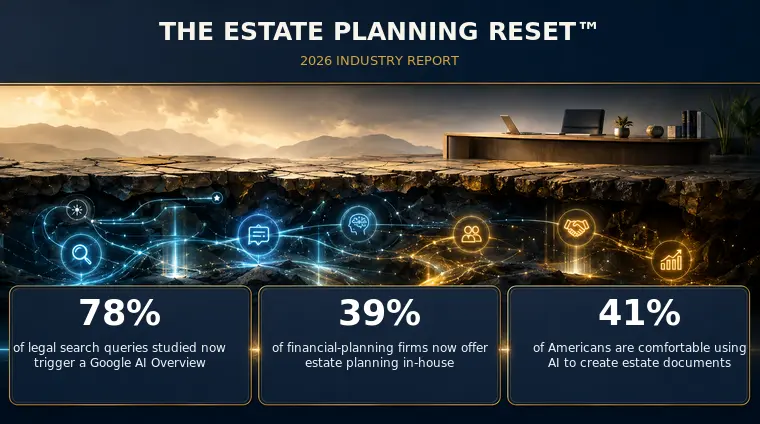
Today, your prospective clients are not waiting patiently for you to explain the basics. They are reading AI-generated answers, scanning Google summaries, asking financial advisors what they should do, watching short videos, comparing firms quietly, and forming opinions long before they ever schedule a consultation.
So the question is not whether webinars still work.
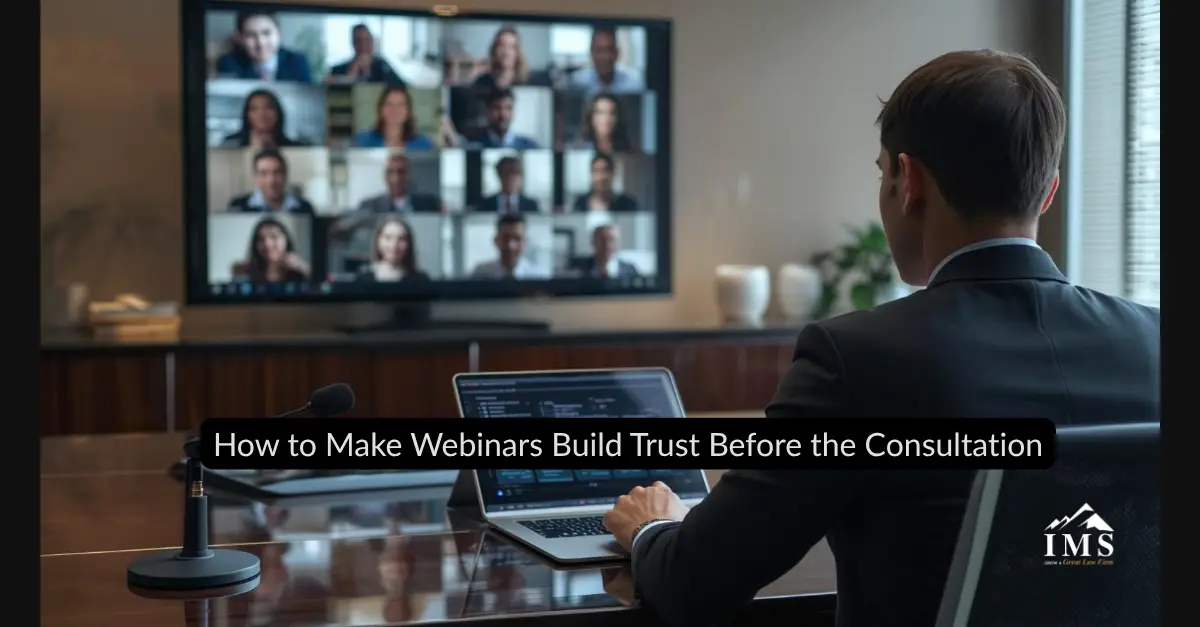
The better question is whether your webinar is helping the right people trust you before they call.
That is a very different standard, and it is the one estate planning and elder law firms need to pay attention to now.
Because a webinar that merely educates can still fail. It can attract attendees, deliver useful information, receive polite thank-you emails, and still produce very little meaningful movement toward qualified consultations. Not because the topic was bad. Not because the attorney was unqualified. Not even because webinars are “dead,” which is one of those lazy conclusions people reach when they do something generically and then blame the format.
Webinars are not dead.
Generic webinar marketing is the problem.
Most Legal Webinars Are Built Around the Wrong Goal
When I look at how many firms approach webinars, I usually see the same pattern. The firm chooses a topic they believe people should care about. They promote the event. They teach the material. They answer questions. Then they measure success by registrations, attendance, and maybe a few follow-up calls.
Those numbers matter, but they do not tell the whole truth.
A webinar can have a decent registration list and still attract mostly passive information gatherers. It can have solid attendance and still fail to create urgency. It can be educational and still leave people thinking, “That was helpful,” without ever thinking, “This is the attorney I trust to handle this.”
That distinction matters.
Your goal is not to prove that you know the law. Your prospects already assume an attorney knows the law, at least at some basic level. Your goal is to help them understand why your judgment matters in their situation, why waiting or guessing creates risk, and why working with the right professional is safer than piecing together answers from AI, DIY tools, family advice, or a well-meaning financial advisor who is stepping slightly outside their lane.
That is where webinars become powerful.
Not as lectures. Not as content events. Not as a way to “get your name out there.”
They work when they become decision infrastructure.
What Prospects Need Before the Consultation
Most prospects do not schedule a consultation the moment they learn something new. They schedule when enough uncertainty has been reduced that taking the next step feels safer than doing nothing.
That is especially true in estate planning and elder law.
These are not impulse decisions. People are thinking about aging parents, blended families, taxes, long-term care, incapacity, probate, conflict, control, and money. They are carrying private fears they may not know how to say out loud. They are often embarrassed by what they do not understand, skeptical of being “sold,” and worried they will either overpay or make a mistake that hurts their family later.
A good webinar does not simply answer legal questions. It organizes the prospect’s uncertainty.
It helps them recognize the real issue underneath the surface issue. It shows them what they may be missing. It gives them a better way to think about the decision in front of them. And just as importantly, it lets them experience the attorney’s judgment before they are sitting across from that attorney in a consultation.
That is the trust-building opportunity.
When someone attends your webinar, they are not only evaluating the content. They are evaluating how you think. They are noticing whether you sound calm, clear, experienced, and practical. They are listening for whether you understand people like them. They are deciding whether you make complexity feel manageable or more overwhelming.
That is why the best webinars do not just provide information. They create confidence.
AI Has Raised the Bar for Educational Content
In 2026, basic educational content is not enough because basic answers are everywhere.
A prospect can ask AI what a revocable living trust is. They can get a quick explanation of probate. They can find checklists about powers of attorney, Medicaid planning, trust funding, guardianship, and estate administration. Some of the information will be useful. Some of it will be incomplete. Some of it will be confidently wrong in ways the prospect cannot detect.
That is the problem.
AI can provide surface-level answers, but it does not replace professional judgment. It does not know the full family context. It does not sit with the tension between a second marriage and adult children from a first marriage. It does not see the warning signs in the way a daughter describes “helping” mom with finances. It does not understand the local practice environment the way an experienced attorney does.
Documents are easy. Judgment is not.
This is one of the strongest arguments estate planning and elder law firms need to make now, and webinars are one of the best places to make it.
Not by criticizing AI for 45 minutes. That will sound defensive and outdated.
Instead, your webinar should demonstrate what AI cannot do. It should show how a trained attorney thinks through risk, context, tradeoffs, timing, and consequences. It should help prospects feel the difference between having information and having guidance.
That is how you defend attorney value without sounding like you are pleading for it.
The Webinar Should Make the Consultation Easier to Say Yes To
A strong webinar does something very specific before the consultation. It reduces the emotional friction of taking the next step.
By the time someone reaches out after attending a well-designed webinar, they should already understand why the issue matters, why delay is risky, why cheap or generic solutions may not be enough, and why your firm is a credible guide.
That does not mean they are manipulated. It means they are oriented.
There is a big difference.
Too many firms use webinars to teach everything they know, which can actually make the consultation feel less necessary. The prospect leaves with notes, a few definitions, and a vague sense that they should probably do something eventually. Eventually is where good leads go to die.
A better webinar helps the prospect see that their situation deserves a real conversation. It does not try to answer every possible question. It clarifies the decision they are actually facing.
For example, instead of simply explaining the difference between a will and a trust, a stronger webinar helps prospects understand why the “right” plan depends on family dynamics, assets, incapacity risk, privacy concerns, probate exposure, and the consequences of leaving too much to chance.
Instead of giving a generic overview of Medicaid planning, a stronger webinar helps adult children and aging parents understand why timing, documentation, ownership, and assumptions can create expensive problems if they wait until crisis.
Instead of presenting estate planning as a set of documents, a stronger webinar positions it as a professional process designed to protect the family from confusion, delay, conflict, and avoidable loss.
That is the shift.
The webinar is not the product. The webinar is the trust bridge.
Attendance Is Not the Same as Demand
This is where many firms get misled.
They see registration numbers and assume they are building demand. Sometimes they are. Often they are building an audience of curious observers who may never become qualified prospects.
There is nothing wrong with awareness, but awareness is not the same as decision confidence.
The better measure is not simply how many people registered. It is whether the right people attended, stayed engaged, understood the value of legal guidance, and knew the next step.
This matters because estate planning and elder law firms do not need endless casual viewers. They need better-fit prospects who arrive more prepared, more serious, and more confident in the firm’s value before the consultation begins.
That kind of prospect is less likely to price shop. Less likely to disappear after asking for “more information.” Less likely to compare your professional process to an online form. Less likely to treat the consultation like a free class.
They have already experienced your thinking.
That is the advantage.
How Premium Firms Think About Webinars Differently
Premium firms do not treat webinars as isolated events. They treat them as part of a larger trust-building system.
The topic is chosen because it speaks to a real decision the prospect is trying to make. The promotion is framed around the tension the prospect feels, not just the information being offered. The webinar itself demonstrates judgment, not just knowledge. The follow-up reinforces the main point and makes the next step feel logical. The consultation is positioned as the place to apply the attorney’s judgment to the prospect’s specific situation.
Everything connects.
That is why some webinars quietly produce strong consultations while others create a flurry of activity and very little revenue.
The difference is not usually production quality. It is not the platform. It is not whether the slides are beautiful, although please, let us not make them painful.
The difference is whether the webinar was designed around the prospect’s decision process.
What are they afraid of? What are they misunderstanding? What false confidence have they picked up from AI, DIY tools, or informal advice? What do they need to believe before they will take action? What would make them feel safe enough to schedule a consultation with your firm?
Those are the questions that matter.
When you build around those questions, the webinar becomes far more than content. It becomes a controlled environment where the prospect can experience your clarity, your standards, and your ability to guide them through complexity.
That is what builds trust before the consultation.
The Real Opportunity for Estate Planning and Elder Law Firms
The firms that win in this next chapter will not be the ones who simply create more content, host more events, or chase every marketing tactic that promises attention.
They will be the firms that understand the difference between being seen and being chosen.
Webinars can absolutely help with that, but only when they are built to create confidence. The prospect should leave thinking, “They understand the problem behind the problem.” They should feel more aware of the risk of delay, more skeptical of generic solutions, and more confident that the attorney’s role is not merely to produce documents, but to apply judgment.
That is where marketing starts to protect attorney value instead of unintentionally commoditizing it.
And frankly, this is also where many firms need to raise their standards. If your webinar could be delivered by any attorney in your practice area with a few edits to the logo, it is probably not doing enough. If it teaches but does not differentiate, it is not doing enough. If people attend but do not understand why your firm is the safer choice, it is not doing enough.
That does not mean the webinar has to be dramatic or overly polished. It means it has to be intentional.
It has to show how you think.
Because if your marketing does not show how you think, prospects will compare you on what you do. And when they compare only on what you do, the conversation gets very small very quickly.
They compare documents. They compare fees. They compare convenience. They compare surface-level promises from firms that may not be comparable at all.
Your webinar can prevent that.
It can move the conversation back to judgment, fit, risk, and confidence. It can help the right prospects understand why expertise matters before they are tempted to choose the easiest or cheapest option. It can make your consultation feel less like a sales appointment and more like the next responsible step.
That is the kind of webinar marketing that still works.
And that is the kind worth doing.
Ready to Make Webinars Work Harder for Your Firm?
Join us on May 27 for our live webinar, How to Succeed at Webinar Marketing in 2026, where we will unpack how estate planning and elder law firms can use webinars to build trust, demonstrate judgment, and attract better-fit prospects who arrive with more confidence before the consultation.
Register for the May 27 webinar: How to Succeed at Webinar Marketing in 2026
Frequently Asked Questions
Do webinars still work for estate planning and elder law firms?
Yes, webinars still work, but only when they are designed to create trust and decision confidence. A webinar that simply teaches basic information may attract attendees, but a stronger webinar helps prospects understand why the attorney’s judgment matters and why the next step should be a consultation.
Why do some webinars get registrations but not consultations?
Many webinars are built around education instead of decision-making. People may attend because the topic is interesting, but if the webinar does not address their fears, misunderstandings, urgency, and need for professional guidance, they may leave informed but unmotivated to act.
Should a webinar give away a lot of legal information?
A webinar should be genuinely useful, but it should not try to replace the consultation. The best webinars clarify the issue, reveal the risks of generic answers, and help prospects see why their situation deserves personalized legal guidance.
How does AI change webinar marketing for attorneys?
AI has made basic legal information easier to access, which means attorneys need to use webinars to demonstrate judgment, not just knowledge. Prospects need to see how an experienced attorney thinks through complexity, risk, family dynamics, timing, and consequences.
What makes a webinar attract better-fit prospects?
Better-fit prospects are attracted when the webinar speaks directly to the real decision they are trying to make. The topic, framing, presentation, and follow-up should all reinforce the value of the attorney’s expertise and make the consultation feel like the logical next step.
What should law firms measure besides registrations?
Registrations matter, but they are not the whole story. Firms should also look at attendance quality, engagement, follow-up response, consultation requests, prospect readiness, and whether attendees arrive with a stronger understanding of the firm’s value.